Plugging In, Not Swapping Out: The Rise of Rechargeable Hearing Aids
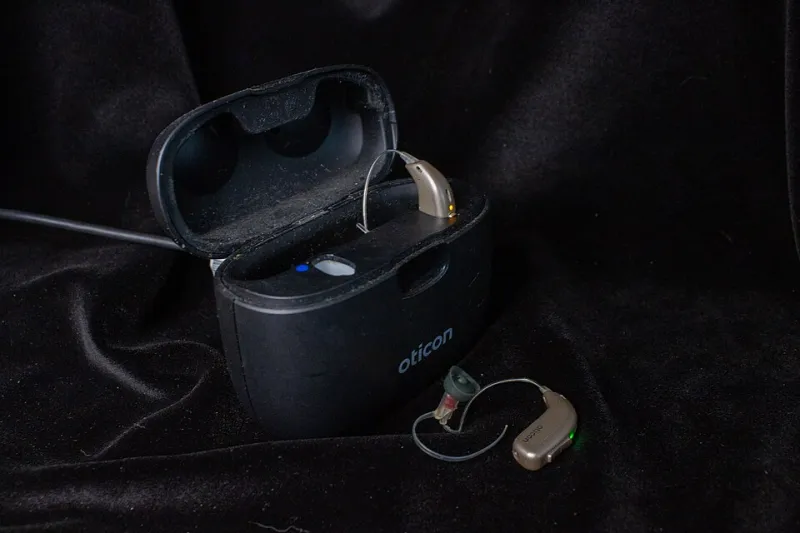
Photo: Bastique, CC BY 4.0, via Wikimedia Commons
For decades, the small, coin-shaped zinc-air battery was an unavoidable fixture of hearing aid ownership. Users learned to keep spare packs in purses, desk drawers, and coat pockets — because running out of power at the wrong moment was not a matter of if, but when. Today, that reality is changing rapidly. Rechargeable hearing aid technology has matured to the point where it is no longer a premium novelty; it is fast becoming the standard expectation for anyone entering the hearing care market.
At Ear Machine, we believe that the best hearing technology is the kind that quietly fits into your life rather than demanding constant attention. Rechargeable systems represent exactly that philosophy.
Why Disposable Batteries Have Reached Their Limits
Zinc-air batteries are inexpensive per unit, but the cumulative cost tells a different story. A typical hearing aid user replacing batteries every three to seven days can spend anywhere from $100 to $300 annually on disposables — and that figure doubles for bilateral users wearing aids in both ears. Beyond cost, the physical act of changing a tiny battery presents real challenges. For older adults or anyone with reduced dexterity or diminished vision, prying open a battery door and aligning a cell smaller than a pencil eraser can be genuinely frustrating and, at times, impossible without assistance.
Disposable batteries also carry an environmental cost. Billions of hearing aid batteries are discarded in the United States each year, contributing to landfill waste and the ongoing challenge of safe heavy-metal disposal. As sustainability becomes a more prominent consumer concern, the case for rechargeable alternatives grows stronger.
The Technology Powering the Change
The most significant driver of the rechargeable revolution is lithium-ion chemistry — the same technology found in smartphones and electric vehicles. Lithium-ion cells hold considerably more energy than traditional zinc-air batteries and, crucially, they are integrated directly into the hearing aid housing rather than inserted and removed. This sealed design protects internal components from moisture and debris, which is a meaningful reliability advantage for users in active or outdoor environments.
Leading manufacturers have developed proprietary charging cases that function much like the cases used for wireless earbuds. A user simply places their hearing aids in the case overnight, and by morning the devices are fully charged and ready for a full day of use. Many current systems deliver 24 hours or more of runtime on a single charge, with some models offering closer to 30 hours when streaming is factored in conservatively.
For users who spend extended time away from a power source, portable charging cases with built-in battery reserves provide an additional layer of security. These cases can recharge hearing aids multiple times without being plugged into the wall — a practical solution for travelers, campers, or anyone whose daily routine takes them far from an outlet.
Comparing Today's Leading Rechargeable Systems
Not all rechargeable platforms are identical, and understanding the distinctions helps users make informed decisions.
Lithium-ion integrated cells are currently the dominant technology. Because the battery is sealed within the device, users cannot swap it out independently — a trade-off that requires periodic professional battery replacement after several years of use, similar to a smartphone. However, the convenience and moisture resistance advantages are substantial.
Silver-zinc rechargeable batteries represent an alternative approach used by some manufacturers. These cells are removable and replaceable by the user, offering flexibility while still reducing the frequency of battery changes compared to standard zinc-air. Runtime is generally competitive, though slightly shorter than lithium-ion in most head-to-head comparisons.
Inductive and contact charging are the two primary methods for replenishing power. Contact charging, where the hearing aid physically connects to metal contacts inside a case, is the more common approach. Inductive charging operates without direct contact and is gaining traction as a premium option, particularly for users who find aligning small devices difficult.
What This Means for Daily Life
The practical impact of switching to rechargeable technology is difficult to overstate for long-term hearing aid users. The ritual of battery management — checking charge levels, carrying spares, executing the battery swap — simply disappears. Users report a meaningful reduction in anxiety around device reliability, particularly in social and professional settings where a dead battery at an inopportune moment can be disruptive or embarrassing.
For family members and caregivers supporting older adults with hearing loss, the simplification is equally valuable. A charging routine that mirrors placing a phone on a nightstand is far more sustainable than managing a supply of disposables and assisting with manual battery changes.
From a financial perspective, the upfront cost of rechargeable-capable hearing aids is typically higher than comparable disposable-battery models. However, when the ongoing cost of batteries is removed from the equation, many users reach a break-even point within one to two years — after which the savings accumulate steadily.
Looking Ahead
The trajectory of rechargeable hearing aid technology points toward even greater runtime, faster charging speeds, and more compact charging solutions. Wireless charging pads, solar-assisted cases, and extended battery longevity are all areas of active development among leading manufacturers.
For anyone currently evaluating hearing aids — whether for the first time or as an upgrade — rechargeable technology deserves serious consideration. The convenience factor alone is compelling. When combined with cost savings, environmental benefits, and improved device durability, the case becomes difficult to argue against.
At Ear Machine, we see the rechargeable transition as one of the most meaningful quality-of-life improvements in hearing aid design in a generation. Clearer hearing should be effortless, and the best technology is the kind you barely have to think about.