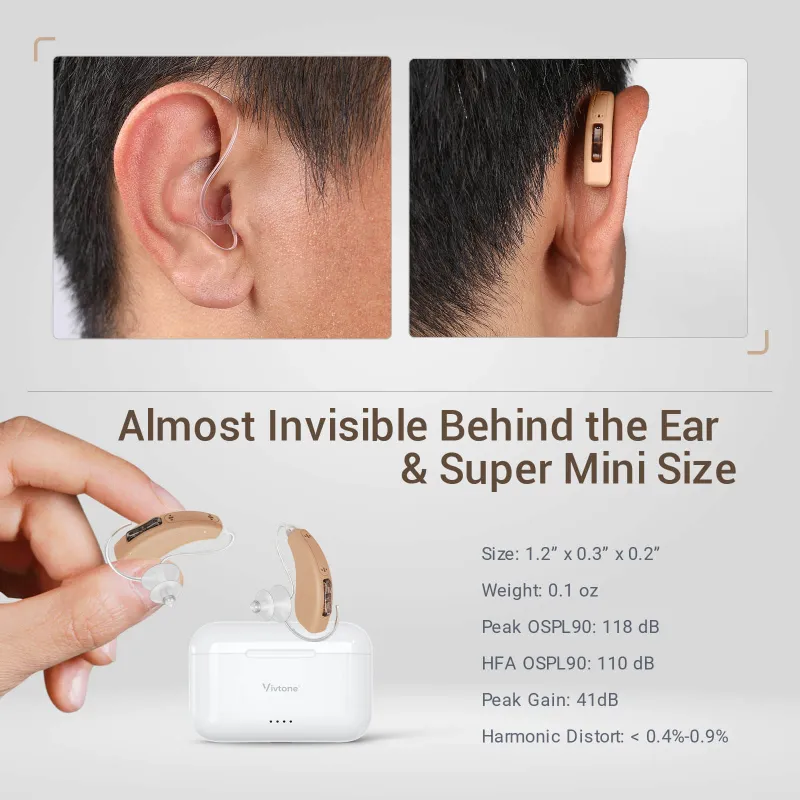
OTC Sound Amplifiers vs. Prescription Hearing Aids: The FDA's Guidance and What It Means for Your Hearing
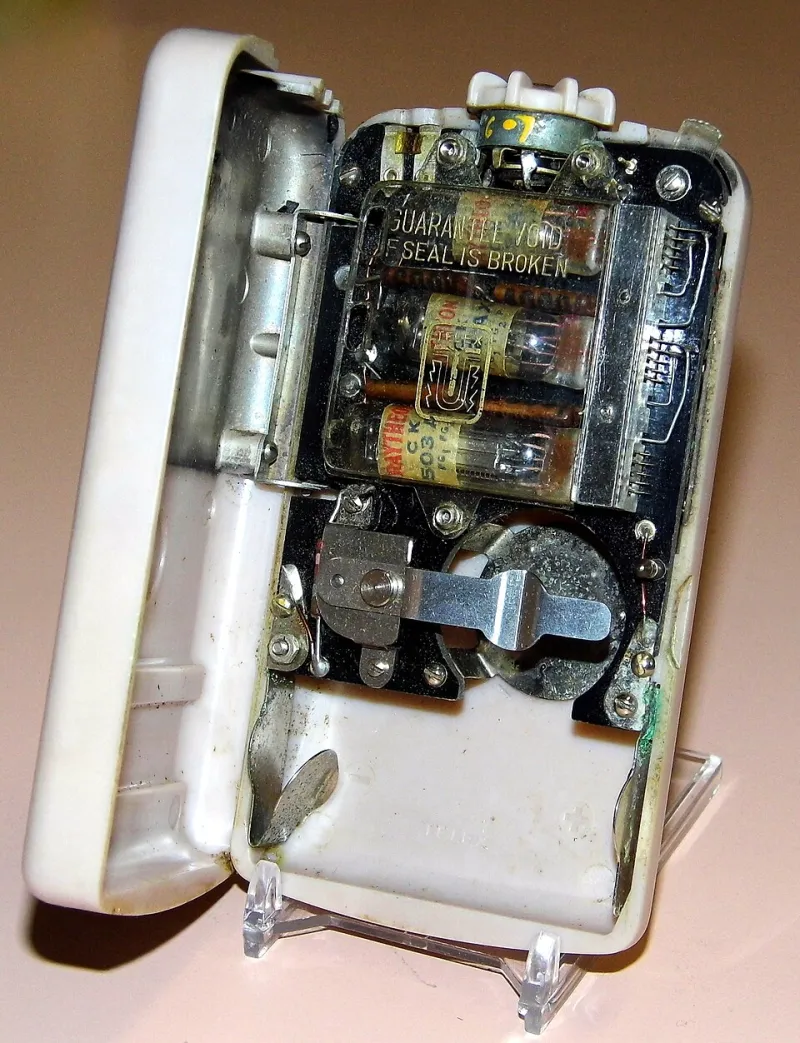
Photo: Joe Haupt from USA, CC BY-SA 2.0, via Wikimedia Commons
Walk through the electronics aisle of any major American retailer today and you are likely to find an array of compact, in-ear devices marketed with language that sounds remarkably similar to what you might hear from an audiologist. Words like clarity, amplification, and enhanced hearing appear prominently on packaging that carries price tags ranging from $20 to several hundred dollars. The question consumers are increasingly asking—and rightfully so—is whether these products can substitute for clinically evaluated hearing aids.
The Food and Drug Administration has a specific and consequential answer to that question. Understanding the regulatory framework the agency has established is not merely a matter of bureaucratic detail. It is a practical guide to making a decision that will directly affect your auditory health.
Two Categories, Two Very Different Standards
The FDA classifies hearing devices into two distinct categories, each governed by separate regulatory requirements.
Hearing aids are FDA-regulated medical devices intended to compensate for hearing impairment. As of August 2022, the agency established a formal over-the-counter (OTC) hearing aid category for adults with mild to moderate hearing loss, allowing certain devices to be sold without a prescription or a prior audiological examination. However, these OTC hearing aids are still medical devices subject to FDA performance standards, labeling requirements, and manufacturing controls. They are fundamentally different from the unregulated amplifiers that occupy much of the consumer market.
Personal Sound Amplification Products (PSAPs), by contrast, are explicitly not intended to compensate for hearing impairment. The FDA has stated clearly that PSAPs are consumer electronics designed for recreational or situational use by individuals with normal hearing—for example, amplifying distant sounds while birdwatching or hunting. The agency prohibits PSAP manufacturers from marketing their products as hearing loss solutions. When such marketing occurs, it represents a regulatory violation.
The practical implication is significant: if you are purchasing a device to address a genuine hearing deficit, PSAPs are not the appropriate tool—regardless of how they are packaged or priced.
What the OTC Hearing Aid Rule Actually Changed
The Over-the-Counter Hearing Aid Act, signed into law in 2017 and implemented by the FDA in 2022, was designed to improve access to hearing care for the estimated 30 million Americans with mild to moderate hearing loss. By eliminating the prescription requirement for a defined category of hearing aids, the agency aimed to reduce cost barriers and streamline the path to treatment.
This was a meaningful policy shift. Prior to the rule, all hearing aids required a licensed hearing professional's involvement in the fitting and dispensing process. The new framework allows qualified OTC devices to be purchased directly at pharmacies, electronics stores, and online retailers.
However, the rule also introduced important consumer safeguards. FDA-compliant OTC hearing aids must:
- Include output limits to prevent excessive amplification that could damage residual hearing
- Carry labeling that clearly identifies the device as intended for adults 18 and older with perceived mild to moderate hearing loss
- Provide instructions for safe use and information about when to seek professional evaluation
- Meet specific electroacoustic performance standards
PSAPs, which fall outside the FDA's medical device framework entirely, are subject to none of these requirements.
Cost Comparisons: What You Are Actually Paying For
Price is frequently the first consideration that drives consumers toward PSAPs. A basic amplifier might retail for $25 to $150. FDA-regulated OTC hearing aids from established manufacturers typically range from $200 to $1,500 per pair. Prescription hearing aids fitted by an audiologist can range from $2,000 to $7,000 or more, depending on technology tier and professional services included.
The cost differential is real, but so is the performance differential.
PSAPs amplify sound indiscriminately. They make everything louder—including background noise, wind interference, and ambient room sound that the human auditory system would ordinarily filter. For someone with hearing loss, undifferentiated amplification can be uncomfortable, disorienting, and in some cases harmful if output levels are not appropriately limited.
FDA-regulated hearing aids—whether OTC or prescription—are engineered with clinical intent. Modern devices from reputable manufacturers incorporate directional microphone arrays that prioritize speech frequencies, digital noise reduction algorithms, and feedback suppression systems. Prescription devices add the layer of professional audiometric fitting, which calibrates the device's output to the specific contours of an individual's hearing loss profile.
In audiology, the concept of audibility—ensuring that the full spectrum of speech sounds is accessible to the listener—is the benchmark against which device performance is measured. PSAPs are not designed or evaluated against this standard.
How to Determine Which Option Is Right for You
The most responsible starting point for anyone experiencing hearing difficulties is a professional hearing evaluation. An audiogram—the standard test used to map hearing sensitivity across frequencies—provides the clinical foundation for any treatment decision. Without this baseline, selecting a hearing device is essentially guesswork.
The FDA itself recommends that consumers consult a licensed hearing professional before purchasing any hearing device, including OTC hearing aids, if they experience any of the following:
- Sudden or rapidly progressive hearing loss
- Hearing loss in one ear only
- Pain, drainage, or a sense of fullness in the ear
- Tinnitus (ringing or buzzing in the ears)
- Dizziness or balance problems
These symptoms may indicate underlying medical conditions that require evaluation before amplification is introduced.
For adults with confirmed mild to moderate hearing loss who have no contraindicated symptoms, FDA-compliant OTC hearing aids represent a legitimate and accessible option—particularly for those who face financial or geographic barriers to professional care. For individuals with moderate-to-severe or severe hearing loss, prescription devices fitted by a licensed audiologist remain the clinical standard.
The Bottom Line on Buying Decisions
The democratization of hearing technology is, broadly speaking, a positive development. More Americans now have access to devices that can meaningfully improve their quality of life. But expanded access also creates expanded opportunity for consumer confusion—and for products that exploit that confusion.
At Ear Machine, our position is grounded in the same principle that guides the FDA's framework: informed decisions lead to better outcomes. Before you invest in any hearing device, know whether it is a regulated medical product or an unregulated consumer electronic. Know what your specific hearing profile requires. And when in doubt, consult a hearing health professional whose recommendations are anchored in clinical evidence rather than marketing language.
Your hearing deserves technology that was designed with your hearing in mind.