From Bulky to Brilliant: How Next-Generation Hearing Aids Are Winning Over a New Generation
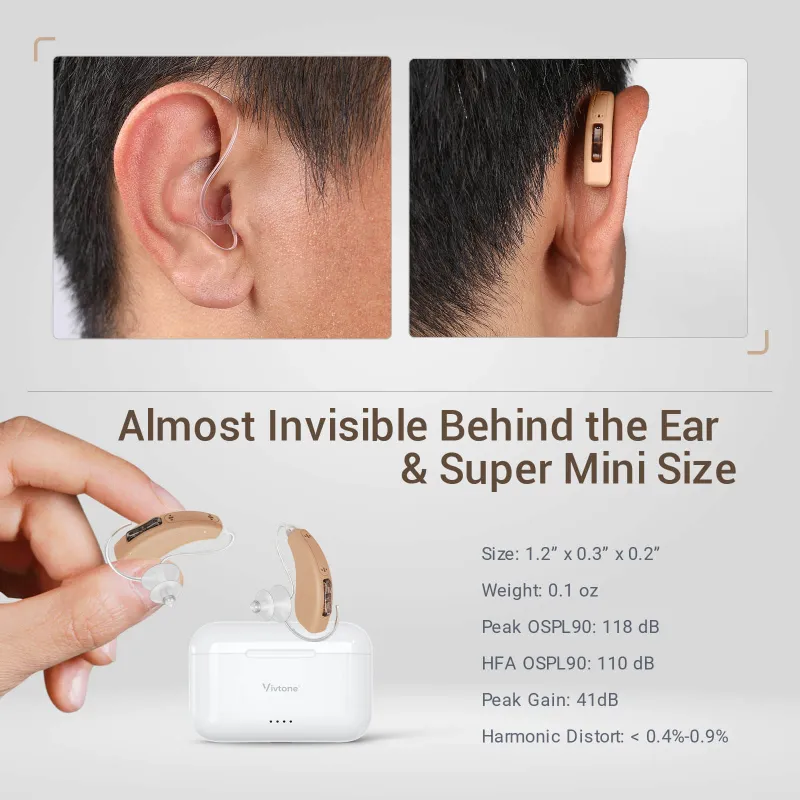
Photo: modern hearing aid technology small invisible device audiologist fitting, via cdn.shopify.com
For decades, hearing aids carried an unfortunate cultural weight. They were associated with advanced age, conspicuous appearance, and the quiet resignation of someone who had "given in" to a health condition. That perception is now dissolving at a pace that is surprising even seasoned audiologists. A convergence of engineering breakthroughs, regulatory changes, and shifting attitudes toward personal wellness technology has repositioned hearing aids as sophisticated health tools—devices people actively want rather than reluctantly accept.
The Miniaturization Milestone
Perhaps no single development has done more to change the conversation than the dramatic reduction in device size. Contemporary receiver-in-canal (RIC) and completely-in-canal (CIC) models have reached a point where many wearers describe them as effectively invisible during daily interactions. Engineers have achieved this by redesigning internal components at the microchip level, compressing processing power that once required substantial hardware into units smaller than a kidney bean.
This is not merely an aesthetic achievement. Smaller devices sit closer to the ear canal's natural anatomy, which improves the directionality of sound capture. Several leading manufacturers have also introduced rechargeable lithium-ion batteries that eliminate the frustration of handling tiny disposable cells—a practical concern that previously discouraged older adults and people with dexterity limitations from pursuing amplification at all.
Artificial Intelligence Enters the Ear Canal
The most consequential technological leap of the current generation is the integration of artificial intelligence into sound processing. Earlier hearing aids amplified sound broadly, which created well-documented problems: background noise was amplified alongside speech, rendering crowded restaurants or busy offices genuinely exhausting for wearers.
AI-driven processors now analyze the acoustic environment in real time, distinguishing between desired speech and ambient noise with a precision that previous analog and early digital systems could not approach. Machine learning algorithms identify patterns—a conversation partner's voice, the rumble of traffic, the hum of an HVAC system—and make continuous micro-adjustments measured in milliseconds. Some devices learn individual user preferences over time, automatically applying customized settings based on location or recurring listening environments.
Bluetooth connectivity has further expanded functionality. Many current models stream audio directly from smartphones, televisions, and other devices, effectively doubling as wireless earbuds. For younger adults already accustomed to wireless audio ecosystems, this integration removes a substantial psychological barrier. A hearing aid that also functions as a premium audio accessory occupies an entirely different cultural space than the beige, hook-shaped devices of earlier eras.
Over-the-Counter Access Changes the Equation
A regulatory development in 2022 continues to reverberate through the auditory health landscape. The U.S. Food and Drug Administration's authorization of over-the-counter (OTC) hearing aids for adults with mild to moderate hearing loss removed the requirement for a professional fitting before purchase. While audiologists remain essential for comprehensive care—particularly for individuals with significant or complex hearing loss—OTC availability has meaningfully lowered the barrier to entry.
Consumers who might have postponed addressing early hearing changes due to cost, scheduling difficulty, or simple reluctance to formalize a diagnosis now have a pathway to amplification that mirrors how they purchase other health and wellness products. Retail and direct-to-consumer channels have responded with an expanding range of options across multiple price points, creating competitive pressure that benefits all consumers.
It is worth noting that OTC devices are not appropriate for every type or degree of hearing loss. Ear Machine consistently recommends consulting a licensed audiologist for a comprehensive hearing evaluation before selecting any amplification solution. A professional assessment ensures that the chosen device addresses the specific frequencies and dynamics of an individual's hearing profile.
Why Younger Adults Are Showing Up
Audiologists practicing in metropolitan areas across the United States have noted a discernible demographic shift in their patient populations. Adults in their thirties and forties—and in some practices, individuals even younger—are scheduling evaluations at rates that would have seemed improbable a decade ago.
Several factors appear to be contributing. Awareness of noise-induced hearing loss has grown substantially, driven in part by public health campaigns and greater media coverage of the long-term auditory consequences of recreational and occupational noise exposure. A generation that came of age with earbuds and concert culture is beginning to reckon with the cumulative effects of years spent in high-decibel environments.
Additionally, the wellness culture that has normalized proactive engagement with physical and mental health has extended its influence to auditory health. Hearing loss is increasingly understood not as an isolated sensory impairment but as a condition with documented connections to cognitive health, social engagement, and overall quality of life. Research linking untreated hearing loss to elevated dementia risk has received particular attention and appears to be motivating earlier intervention.
Performance That Commands Respect
For anyone who has worn hearing aids in the past and found the experience disappointing, the performance gap between legacy technology and current devices warrants serious attention. Speech intelligibility in complex listening environments—the benchmark that matters most to most wearers—has improved substantially. Wind noise reduction, once a persistent frustration for outdoor enthusiasts, has been addressed through directional microphone arrays and intelligent filtering.
Telecoil technology, which enables direct audio coupling with compatible hearing loops in public venues such as theaters, houses of worship, and airports, has been refined and integrated into a broader range of models. For individuals who frequently navigate public spaces, this feature can meaningfully improve communication without requiring any additional equipment.
A Shift Worth Embracing
The trajectory of hearing aid technology reflects a broader pattern visible across medical device innovation: solutions that were once conspicuous, cumbersome, and stigmatized are becoming discreet, intelligent, and socially unremarkable. For the millions of American adults who currently experience some degree of hearing loss but have not sought treatment, the devices available today represent a genuinely different proposition than what came before.
The decision to address hearing loss is, ultimately, a personal one. However, the technological and cultural conditions that once made that decision feel daunting have shifted considerably. Consulting with an audiologist or hearing care professional remains the most reliable first step toward understanding one's options—and the range of those options has never been broader or more sophisticated.