Powered All Day: How Lithium-Ion Batteries Are Redefining What Hearing Aids Can Do
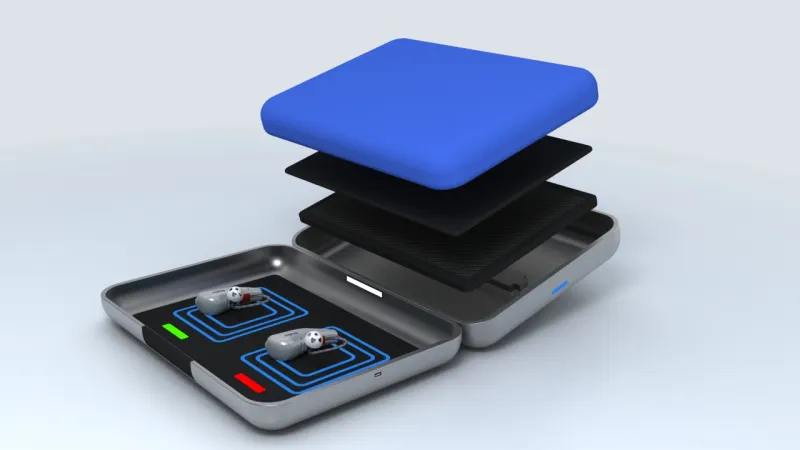
Photo: modern hearing aid charging case lithium battery technology close up, via storage.googleapis.com
For decades, the humble zinc-air battery was an unquestioned fixture of hearing aid ownership. Tiny, disc-shaped, and color-coded by size, these disposable cells powered a generation of devices with quiet reliability. But they also came with familiar frustrations: the Sunday-evening scramble to find a replacement pack, the mid-dinner fade in sound quality, the sticky tab that refused to peel cleanly. Today, that experience is undergoing a fundamental transformation — and lithium-ion technology is the reason why.
The Old Guard: Understanding Zinc-Air Power
Zinc-air batteries operate on a straightforward electrochemical principle. When the protective tab is removed, ambient oxygen enters through small perforations and activates the cell. This design made them compact and energy-dense relative to their size, which was precisely why the hearing aid industry relied on them for so long.
Yet the limitations were real. Zinc-air cells are sensitive to humidity and temperature, meaning that a humid summer in Houston or a dry winter in Denver could meaningfully affect how long a battery lasted. Typical lifespans ranged from three to ten days depending on the device model and the wearer's usage patterns. For individuals with dexterity challenges — a common concern among older adults who represent a significant portion of hearing aid users — the process of handling and inserting batteries the size of a shirt button was genuinely difficult.
The cumulative cost was also worth noting. A hearing aid wearer replacing batteries every five days could spend upward of $100 to $200 annually on disposable cells alone, depending on the brand and retailer.
Enter Lithium-Ion: A Different Kind of Power
Lithium-ion technology, long established in smartphones, laptops, and electric vehicles, has made decisive inroads into the hearing aid market over the past several years. The appeal is straightforward: these rechargeable cells offer a substantially higher energy density, a longer usable lifespan measured in years rather than days, and a charging experience that has become second nature to most American consumers.
Leading hearing aid manufacturers have integrated lithium-ion systems into their flagship product lines, and the results speak clearly. Most rechargeable hearing aids built on this chemistry deliver 18 to 24 hours of continuous use on a single charge — enough to carry a wearer from an early morning commute through an evening at the theater without interruption. Some models with aggressive streaming use, such as those connected via Bluetooth to a smartphone or television, may see slightly shorter runtimes, but even then, performance typically remains sufficient for a full waking day.
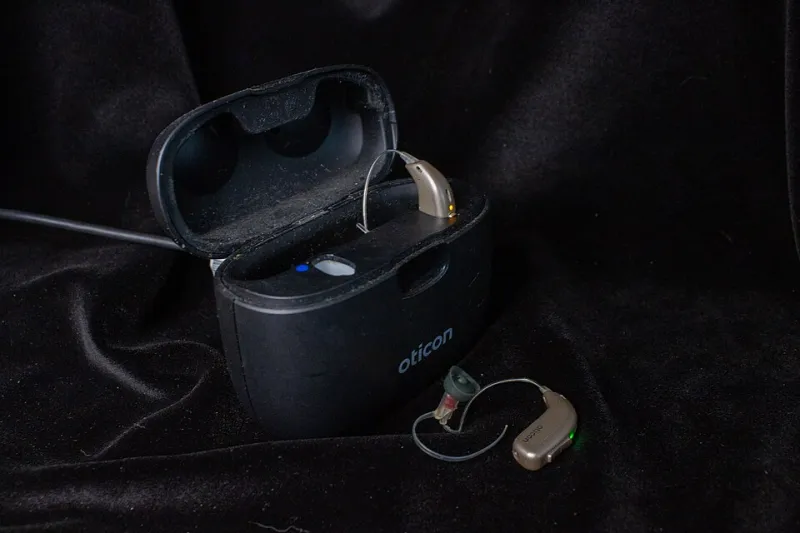
Charging itself has become remarkably convenient. Inductive charging cases — compact enough to fit in a jacket pocket or a travel bag — allow users to simply set their devices in place overnight. Several premium models now support rapid charging protocols that deliver several hours of use from a 30-minute charge, a meaningful advantage for someone who forgets to charge before a long day.
Consistency Matters as Much as Duration
One underappreciated advantage of lithium-ion systems is voltage consistency. Zinc-air batteries deliver diminishing power as they approach depletion, which can subtly degrade sound processing quality in the final hours of a cell's life. A wearer might notice that speech sounds slightly less crisp or that background noise management feels less effective — changes that are easy to attribute to the environment rather than the battery.
Lithium-ion cells, by contrast, maintain a relatively stable voltage output across the majority of their discharge cycle. This means the sophisticated digital signal processing that modern hearing aids perform — directional microphone management, noise reduction algorithms, frequency shaping — operates at consistent performance levels throughout the day. For users whose devices are doing considerable computational work, this stability is not a minor footnote; it is a meaningful quality-of-life improvement.
What Active Lifestyles Demand
American hearing aid users lead varied lives. A retired schoolteacher in Phoenix might use her devices primarily for conversation and television. A 52-year-old sales manager in Chicago might stream calls continuously for eight hours, then attend a noisy networking event in the evening. A weekend cyclist in Colorado needs a device that handles sweat, altitude, and temperature swings without complaint.
Lithium-ion hearing aids are better suited to these demands for several reasons. The sealed rechargeable design typically allows manufacturers to build devices with improved moisture resistance ratings, since there is no battery door requiring an opening. Many current lithium-ion models carry IP68 ratings, indicating resistance to dust and submersion in water — a standard that disposable-battery models rarely match.
The elimination of battery doors also reduces a common failure point, potentially improving the long-term durability of the device itself.
Choosing Between Battery Types: What Consumers Should Consider
Despite the clear advantages of lithium-ion technology, disposable zinc-air batteries are not yet obsolete, and for certain users, they remain a practical choice. Travelers who spend extended periods in locations without reliable electricity access may prefer the simplicity of carrying spare cells. Users in extremely remote settings, or those who require absolute flexibility in power sourcing, may find that the dependence on a charging case introduces a vulnerability they would rather avoid.
Cost at the point of purchase is another consideration. Rechargeable hearing aid models often carry a higher upfront price than their disposable-battery counterparts, though the long-term economics typically favor rechargeable systems when replacement battery expenses are factored in over a three-to-five-year device lifespan.
Audiologists and hearing care professionals in the United States generally recommend that prospective buyers discuss their daily routines openly before selecting a power system. The right choice is not universal — it depends on lifestyle, dexterity, travel habits, and the specific device models available through a given provider.
The Broader Picture for Hearing Health
At Ear Machine, we view power technology not as an isolated engineering detail but as a component of the larger auditory health ecosystem. A hearing aid that fails mid-afternoon because of a depleted battery is a hearing aid that is not doing its job — and a wearer who struggles with battery management may unconsciously reduce their device usage, undermining the cognitive and communicative benefits that consistent amplification provides.
The lithium-ion transition addresses these friction points directly. By making power management simpler, more reliable, and more aligned with the habits Americans already practice with their other personal electronics, rechargeable hearing aids lower the barriers to consistent daily use. That consistency, audiological research consistently suggests, is where the real benefits of hearing aid adoption accumulate.
Looking Ahead
The battery landscape in hearing aids will continue to evolve. Researchers are investigating next-generation solid-state battery chemistries that promise even greater energy density in smaller form factors, which could eventually enable more discreet device designs without sacrificing runtime. Wireless charging standards are also advancing, with some manufacturers exploring integration with existing Qi charging infrastructure that many Americans already use for smartphones.
For now, the lithium-ion hearing aid represents a meaningful step forward — one that makes all-day clarity not just a marketing promise, but a practical, daily reality for an increasing number of Americans living with hearing loss.