Smarter Devices, Same Struggles: Why Hearing Aid Innovation Alone Isn't Enough

Photo by Photo by Anthony Camerlo on Unsplash on Unsplash
When Better Specs Don't Translate to Better Outcomes
By nearly every measurable standard, today's hearing aids are extraordinary instruments. They process sound in milliseconds, adapt automatically to shifting acoustic environments, stream audio directly from smartphones, and fit discreetly inside the ear canal. Engineers and audiologists have spent decades refining these devices, and the results are genuinely impressive.
And yet, a persistent and uncomfortable reality shadows all of this progress: a significant portion of hearing aid users in the United States remain dissatisfied with their experience. Studies consistently find that between 20 and 30 percent of people who acquire hearing aids either wear them infrequently or abandon them altogether within the first year. For a device category that has arguably never been more capable, that figure demands serious examination.
The question worth asking is not whether the technology has improved — it clearly has. The more important question is why improvement in the devices themselves has not produced a corresponding improvement in patient outcomes.
The Naturalization Gap
One of the most underappreciated challenges in hearing rehabilitation is the time the brain requires to adjust to amplified sound. Hearing loss, particularly age-related hearing loss, typically develops gradually over years or even decades. During that time, the auditory cortex quietly recalibrates its expectations, growing accustomed to a quieter, flatter version of the world.
When a well-fitted hearing aid is introduced, the brain does not simply receive better sound and respond with gratitude. Instead, it often experiences the new input as jarring, overwhelming, or even unpleasant. Voices may seem tinny. Background noise can feel intrusive. The wearer's own voice may sound strange and hollow.
This period of neurological adjustment — sometimes called auditory acclimatization — can extend for weeks or months. It requires patience, consistent wear, and ideally, structured follow-up with a qualified audiologist. The problem is that many patients interpret this discomfort as evidence that the hearing aids are wrong for them, rather than recognizing it as a normal phase of adaptation. Without adequate counseling and realistic expectations, the naturalization gap becomes a dropout point.
No amount of artificial intelligence or advanced signal processing eliminates this adjustment period. It is a biological reality, and addressing it requires time and human guidance — neither of which can be engineered into a chip.
The Fitting Problem
Even the most sophisticated hearing aid is only as effective as the fitting process behind it. A device calibrated inaccurately for a patient's specific audiogram, ear canal geometry, and listening lifestyle will underperform regardless of its technical specifications. This is not a hypothetical concern; it is a documented source of dissatisfaction across the industry.
In the United States, the quality of hearing aid fittings varies considerably depending on the provider, the clinical setting, and the time allocated to the appointment. Best-practice protocols — including real-ear measurement, which verifies that sound is actually reaching the eardrum at the prescribed levels — are not universally applied. Some estimates suggest that fewer than half of all fittings in the country incorporate real-ear measurement as a standard step.
When a fitting falls short, the consequences are predictable. Patients may experience insufficient amplification in the frequencies they need most, or excessive amplification in ranges that cause fatigue. They return for adjustments, grow frustrated, and eventually conclude that hearing aids simply do not work for them. The device's impressive feature set becomes irrelevant.
The irony is that advanced hearing aids often offer extensive programmability and fine-tuning capability. The tools for personalization exist. The challenge lies in ensuring those tools are consistently and skillfully applied.
Comfort as a Clinical Priority
Physical comfort is another dimension that technology alone cannot resolve. Hearing aids must be worn for extended periods — often twelve or more hours per day — to deliver meaningful benefit. If a device causes irritation, pressure, or discomfort in the ear canal, consistent wear becomes unlikely regardless of sound quality.
Fit and comfort are influenced by the quality of the earmold or dome, the weight and form factor of the device, and the individual anatomy of the wearer's ear. These are deeply personal variables. A receiver-in-canal style that works beautifully for one patient may be poorly tolerated by another. Custom earmolds, while more involved to produce, offer a level of individualization that pre-formed domes cannot always match.
Hearing care providers who invest time in evaluating physical fit — and who remain responsive to comfort complaints during the adjustment period — tend to see better long-term adherence among their patients. Comfort counseling is not a secondary concern; it is a direct determinant of whether a hearing aid gets worn at all.
The Expectations Mismatch
Marketing for hearing aids, understandably, emphasizes what the technology can do. Advertisements highlight seamless Bluetooth connectivity, rechargeable convenience, and AI-driven noise reduction. These are genuine capabilities, and they matter to consumers making purchasing decisions.
However, this emphasis can inadvertently create expectations that the real-world experience struggles to meet — particularly in the early weeks of use. A patient who expects to put in a hearing aid and immediately hear with the clarity of youth may be deeply discouraged when the adjustment period proves difficult. The gap between expectation and experience is one of the most reliable predictors of early abandonment.
Addressing this mismatch is largely a matter of pre-fitting counseling. Patients who understand what to expect during the adaptation period, who know that some initial discomfort is normal, and who have a clear plan for follow-up appointments are substantially better positioned to persist through the adjustment phase. This kind of preparation does not require new technology — it requires communication.
Reframing What Progress Looks Like
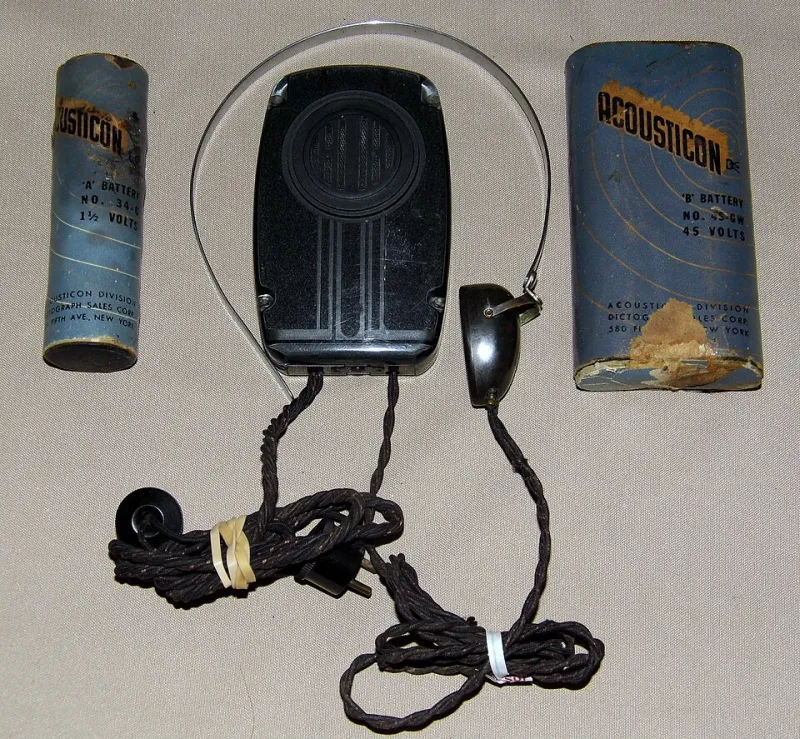
The hearing aid industry has every reason to be proud of what it has built. Devices that once filled a shirt pocket now fit invisibly in the ear canal while processing sound with algorithms of remarkable sophistication. The engineering achievement is real.
But the measure of progress in auditory healthcare cannot be limited to device specifications. True advancement must also be tracked in patient adherence rates, in the consistency of fitting quality, in the adequacy of follow-up care, and in the realism of expectations set before the first device is ever placed in an ear.
The most advanced hearing aid in the world delivers its full potential only when it is correctly fitted, consistently worn, and supported by a patient who understands the adjustment journey ahead. Technology provides the instrument. The clinical relationship, the counseling, and the patient's own commitment provide everything else.
For the millions of Americans living with untreated or undertreated hearing loss, the most important innovation may not be the next generation of processors. It may be a more complete, more honest, and more patient-centered approach to care — one that treats the person wearing the device, not just the audiogram that prompted it.