Your Brain Is Listening: The Surprising Link Between Untreated Hearing Loss and Cognitive Decline
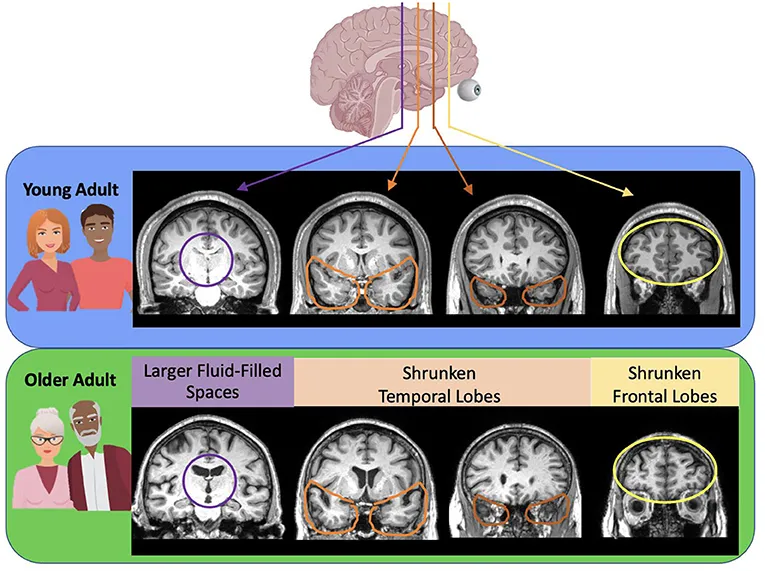
Photo: senior adult brain scan hearing health neuroscience research, via www.frontiersin.org
For many Americans, hearing loss feels like an inconvenience—something to manage with louder TV volumes or politely asking people to repeat themselves. What most people do not realize is that the effects of untreated hearing loss extend far beyond the ear canal. A growing body of neuroscience research suggests that what happens in your ears has profound consequences for what happens in your brain.
The Auditory System and the Brain: A Two-Way Street
The ear does not function in isolation. Sound waves captured by the outer ear travel through a sophisticated chain of structures—the eardrum, the ossicles, the cochlea—before being converted into electrical signals that the auditory nerve carries directly to the brain. The brain's auditory cortex then processes those signals, transforming them into recognizable speech, music, and environmental sound.
This process demands significant cognitive resources. When hearing becomes impaired, the brain must work harder to decode incomplete or distorted auditory information. Researchers call this increased effort "cognitive load," and over time, sustaining that elevated workload takes a measurable toll on broader mental function.
What the Research Is Telling Us
The evidence connecting hearing loss to cognitive decline has been building steadily. A landmark study from Johns Hopkins University, led by Dr. Frank Lin, followed nearly 640 adults over a period of nearly two decades and found that individuals with moderate hearing loss were three times more likely to develop dementia than those with normal hearing. Those with mild loss faced nearly double the risk.
More recently, a 2023 analysis published in The Lancet reinforced these findings, identifying untreated hearing loss as one of the most significant modifiable risk factors for dementia—ranking it alongside physical inactivity, smoking, and social isolation. For a country where the Alzheimer's Association estimates that more than 6.7 million Americans aged 65 and older are currently living with Alzheimer's disease, this is not a peripheral finding. It is a public health concern.
Researchers have proposed several mechanisms to explain the relationship. One leading theory centers on brain atrophy: when the auditory cortex is chronically understimulated due to hearing loss, the neural tissue in that region can shrink over time. Brain imaging studies have confirmed accelerated gray matter loss in individuals with untreated hearing impairment compared to those with normal hearing.
A second theory focuses on social withdrawal. Difficulty following conversations often leads people to disengage from social activities—dinner parties, family gatherings, community events. Social isolation, already well-documented as a driver of cognitive deterioration, compounds the neurological impact of hearing loss itself.
Memory, Attention, and the Hidden Cost of Straining to Hear
Beyond dementia risk, untreated hearing loss is increasingly associated with more immediate cognitive challenges. Studies published in journals including JAMA Internal Medicine have linked hearing impairment to faster rates of memory decline, reduced attention span, and diminished executive function—the mental skills that govern planning, decision-making, and multitasking.
Consider what happens during a typical conversation when hearing is compromised. The brain redirects resources normally allocated to memory encoding and comprehension toward the raw task of decoding sound. The result is that information may be processed but not retained. Many people with hearing loss describe exactly this experience: they hear words but cannot recall what was said moments later. This is not forgetfulness in the traditional sense—it is the downstream consequence of an overloaded auditory processing system.
Early Intervention: What the Evidence Suggests
The most encouraging dimension of this research is what it implies about prevention. If untreated hearing loss is a modifiable risk factor for cognitive decline, then treating hearing loss may help protect cognitive health.
A major clinical trial known as the ACHIEVE study, published in The Lancet in 2023, provided some of the most direct evidence to date. Among older adults at higher risk for cognitive decline, those who received hearing intervention showed a 48 percent reduction in the rate of cognitive deterioration over three years compared to a control group. While researchers are careful to note that hearing aids are not a guaranteed preventive measure, the results strongly suggest that addressing hearing loss early and effectively can meaningfully alter the trajectory of brain aging.
Modern hearing technology has advanced to the point where it can do far more than simply amplify sound. Today's hearing devices are capable of separating speech from background noise, adapting in real time to different acoustic environments, and streaming audio directly from smartphones and televisions. These capabilities reduce the cognitive burden of listening, potentially giving the brain the relief it needs to allocate resources more efficiently.
A Proactive Approach to Auditory and Brain Health
For Americans navigating the realities of aging, the message from the neuroscience community is clear: hearing health is brain health. Waiting years—or decades—to address hearing difficulties is not a neutral choice. Every year of untreated hearing loss represents a period of elevated cognitive strain and potential neural change.
The first step is straightforward: a comprehensive hearing evaluation. Many adults have never had their hearing formally assessed, despite the fact that the National Institute on Deafness and Other Communication Disorders estimates that approximately 28.8 million Americans could benefit from hearing aids. Understanding the current state of your auditory health creates the foundation for informed decisions about intervention.
At Ear Machine, our commitment is to equip individuals with both the knowledge and the technology to make those decisions confidently. Whether you are noticing early signs of hearing difficulty or supporting a loved one through the process, the connection between your ears and your brain is too important to ignore.
Your brain is listening. Make sure it has everything it needs to hear.