Why Busy Restaurants Are the Toughest Room in America for Your Ears
The Familiar Friday Night Frustration
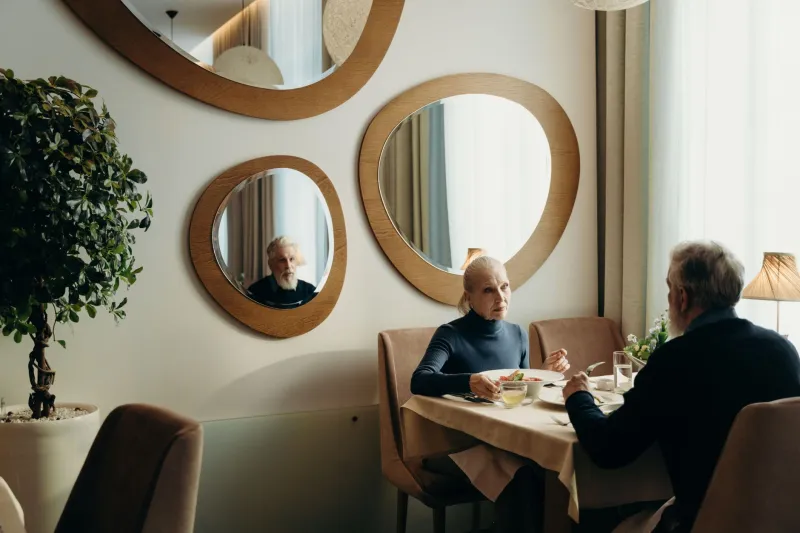
You are seated at a popular restaurant in your hometown. The room hums with conversation, clattering plates, and a playlist that seems just a notch too loud. Your grandchild tells a story from school, and you catch every word. Then the server approaches, asks a simple question about the specials, and suddenly you are nodding along to a sentence you never actually heard.
If this sounds familiar, you are in good company. Understanding speech in noisy environments is one of the most common — and most frustrating — listening challenges, and it can affect people even those with hearing that tests as normal or only mildly reduced.
The Science of the Cocktail Party Effect
Researchers have long been fascinated by what they call the "cocktail party effect" — the brain's remarkable ability to isolate a single voice from a sea of competing sound. It is a computational feat that even the most sophisticated machines struggle to replicate.
When you listen in a quiet room, the task is straightforward: the signal (the voice you want) sits well above the noise floor. In a lively restaurant, however, that gap collapses. The competing chatter occupies many of the same frequencies as the speech you are trying to follow, effectively masking the consonants that carry meaning.
Two factors make this harder as we age:
- Reduced auditory clarity. Even mild high-frequency hearing loss softens consonants like "s," "f," and "th," which are essential for distinguishing words.
- Slower processing. The brain's ability to separate and rapidly sequence competing sound streams gradually declines, so by the time you decode one phrase, the conversation has moved on.
Crucially, a standard hearing screening in a soundproof booth may not flag this problem. Quiet-room tests measure detection; restaurants demand separation.
How Modern Hearing Aids Fight the Noise
Today's hearing technology has made speech-in-noise its central engineering challenge, and the progress is genuinely impressive.
Directional microphones focus sensitivity toward the person in front of you while dampening sound from the sides and behind — a meaningful advantage when the noise is ambient chatter rather than a single loud talker.
AI-driven scene analysis, now common in premium devices, classifies your acoustic environment many times per second and automatically adjusts amplification, noise reduction, and directionality. Some models can even lower the volume of competing voices while preserving the voice you are facing.
Binaural coordination allows a pair of hearing aids to communicate wirelessly, sharing data so both ears work as a single, unified listening system rather than two independent devices.
An important caveat: no device can eliminate background noise entirely. The goal is a better signal-to-noise ratio — nudging the odds in your favor, not performing magic.
Practical Strategies for Your Next Dinner Out
Technology helps most when paired with smart habits. Before your next reservation:
- Choose your seat strategically. Request a corner table or booth away from the kitchen, bar, and entryway. High-backed booths naturally block surrounding sound.
- Sit with your back to the noise. Position yourself so the loudest part of the room is behind you, letting directional microphones do their job.
- Optimize the lighting. You lip-read more than you realize. A well-lit table gives your brain the visual cues it quietly relies on.
- Dine during off-peak hours. An early dinner at 5:30 p.m. offers the same menu with a fraction of the acoustic chaos.
- Use your accessories. Many modern hearing aids pair with remote microphones you can hand to a dining companion, streaming their voice directly to your ears.
- Be upfront. A simple "I hear better when I can see your face" sets the stage for easier conversation — and most people are glad to accommodate.
The Takeaway
Struggling in a loud restaurant is not a personal failing or an inevitable part of aging — it is a well-understood acoustic and neurological challenge. Between today's adaptive hearing technology and a few deliberate seating choices, the gap between hearing your grandkids and hearing your server can shrink considerably. If you find yourself avoiding restaurants altogether, that withdrawal is worth discussing with an audiologist, because the right combination of devices, settings, and strategy can put you back at the table.