Innovation Without Access: How America's Hearing Aid Gap Is Leaving Millions Behind
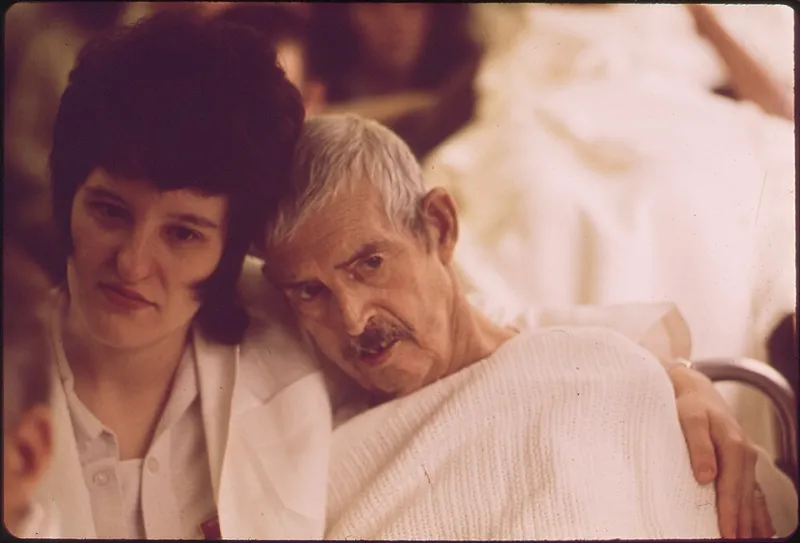
Photo: Bill Strode, Public domain, via Wikimedia Commons
America has a hearing problem—and it is not the kind that better microphones can fix on their own.
Approximately 38 million Americans live with some degree of hearing loss, according to the National Institute on Deafness and Other Communication Disorders. Yet fewer than one in three adults who could benefit from a hearing aid actually uses one. Meanwhile, device manufacturers continue to release products of extraordinary sophistication: aids that stream audio directly from smartphones, automatically adjust to shifting acoustic environments, and fit so discreetly inside the ear canal that they are functionally invisible.
The technology, in other words, is not the bottleneck. The system surrounding it is.
A Market Built on Marvels, Constrained by Structure
The past decade has produced a genuine engineering renaissance in auditory health. Directional microphone arrays, artificial intelligence-driven noise suppression, rechargeable form factors, and Bluetooth Low Energy connectivity have transformed what a hearing aid can do. Devices that once required weekly battery changes and constant manual adjustments now operate with minimal user intervention, adapting in real time to restaurants, concert halls, and quiet living rooms alike.
For anyone fortunate enough to access this technology, the difference can be profound. Conversations that once felt like decoding exercises become natural again. The cognitive fatigue that accompanies hours of straining to hear diminishes. Quality of life improves in ways that extend well beyond the auditory.
Yet these advances exist largely in isolation from the Americans who need them most. The reasons are structural, overlapping, and stubbornly resistant to simple solutions.
The Insurance Exclusion That Has Persisted for Decades
Medicare, the federal program covering most Americans over 65—the demographic most affected by age-related hearing loss—does not cover hearing aids. This exclusion dates to the program's founding in 1965 and has survived every major legislative overhaul since. The result is that the population with the highest prevalence of hearing loss carries the greatest out-of-pocket burden for addressing it.
Private insurance coverage is inconsistent at best. Some employer-sponsored plans include a modest hearing aid benefit; many do not. Medicaid coverage varies considerably by state, leaving low-income adults in many parts of the country with no coverage at all.
For a pair of prescription hearing aids fitted by an audiologist, the average American can expect to spend between $2,000 and $7,000 or more. That figure is not a misprint. For a retired household on a fixed income, it represents a prohibitive barrier—one that no amount of technological progress has lowered on its own.
Provider Shortages and Geographic Inequity
Even for those who can afford care, access to qualified providers is far from guaranteed. The United States faces a documented shortage of audiologists, particularly in rural and underserved communities. The Bureau of Labor Statistics projects continued demand for audiologists through the coming decade, but supply has not kept pace. Many counties across the American South, the rural Midwest, and parts of the Mountain West have limited or no audiological services within a reasonable driving distance.
This geographic inequity compounds the affordability problem. Individuals who cannot easily reach a provider may forgo evaluation entirely, or delay it until hearing loss has become severe enough to significantly impair daily function. By that point, the neurological consequences of prolonged auditory deprivation—including documented associations with accelerated cognitive decline—may already be underway.
Teleaudiology, which allows remote hearing assessments and some fitting adjustments via digital platforms, has emerged as a partial solution. Several hearing technology companies have invested meaningfully in remote care infrastructure. But telehealth approaches require reliable broadband connectivity, a resource that remains unevenly distributed across the very rural communities most affected by provider shortages.
The Fitting Complexity Problem
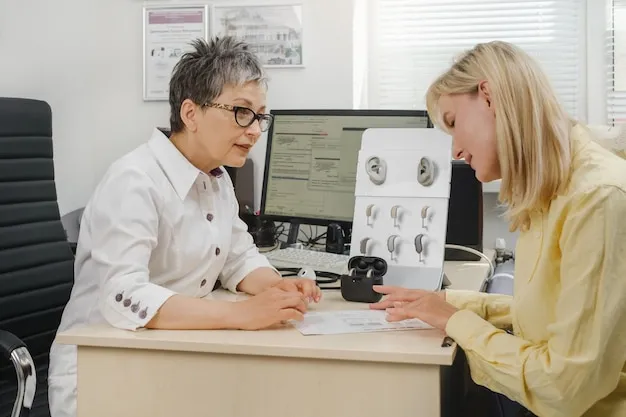
Purchasing a hearing aid is not like buying a pair of glasses off a rack. Prescription devices require audiometric evaluation, professional fitting, and often multiple follow-up adjustments before they perform optimally for an individual user. The fitting process demands time, expertise, and patience—from both the clinician and the patient.
When that process is rushed, incomplete, or inaccessible, outcomes suffer. Research has consistently found that improperly fitted hearing aids are a leading driver of device abandonment. A person who receives a device that does not sound right, causes discomfort, or fails to deliver meaningful improvement in real-world listening situations is unlikely to persevere. The aid ends up in a drawer, and the individual returns to struggling without amplification.
The 2022 authorization of over-the-counter (OTC) hearing aids by the FDA was designed in part to address this barrier by creating a lower-cost, self-fitting pathway for adults with mild to moderate hearing loss. OTC devices have meaningfully expanded access for some users. But they are not appropriate for all types or severities of hearing loss, and they do not eliminate the need for professional care in many cases. They are a supplement to the existing system, not a replacement for it.
What Systemic Change Would Actually Require
Closing the hearing aid gap would require movement on several fronts simultaneously. Medicare coverage expansion—long advocated by hearing health professionals and patient advocates—would address the most significant single coverage gap. Legislative proposals to add hearing benefits to Medicare have appeared in various forms over the years but have not yet achieved enactment.
Expanding audiology training programs and incentivizing practice in underserved areas could begin to address the provider shortage over time. Investment in teleaudiology infrastructure, particularly in rural broadband access, would accelerate the reach of remote care models.
Manufacturers, for their part, have a role to play in making devices more affordable without sacrificing quality—a challenge that the OTC market has begun to address at the lower end of the severity spectrum, but that remains largely unresolved for moderate to severe loss.
The Human Cost of the Status Quo
Behind every statistic is a person navigating a quieter, more isolated version of the world than they need to. Adults with untreated hearing loss report higher rates of depression, social withdrawal, and workplace difficulty. Older adults face elevated risks of falls, partly attributable to the vestibular and attentional effects of hearing impairment. The cognitive toll of years spent straining to parse conversation is only beginning to be fully understood.
The technology to address much of this suffering already exists. It sits on the shelves of audiology clinics and in the product catalogs of innovative manufacturers. The machinery of access—financial, geographic, clinical, and systemic—has simply not been built to deliver it equitably.
Until that machinery catches up to the devices it is meant to distribute, America's hearing crisis will persist not for lack of solutions, but for lack of pathways to reach them.
Ear Machine is committed to advancing awareness of auditory health and the technologies that support it. For guidance on hearing evaluation and device options available to you, consult a licensed audiologist or hearing care professional.